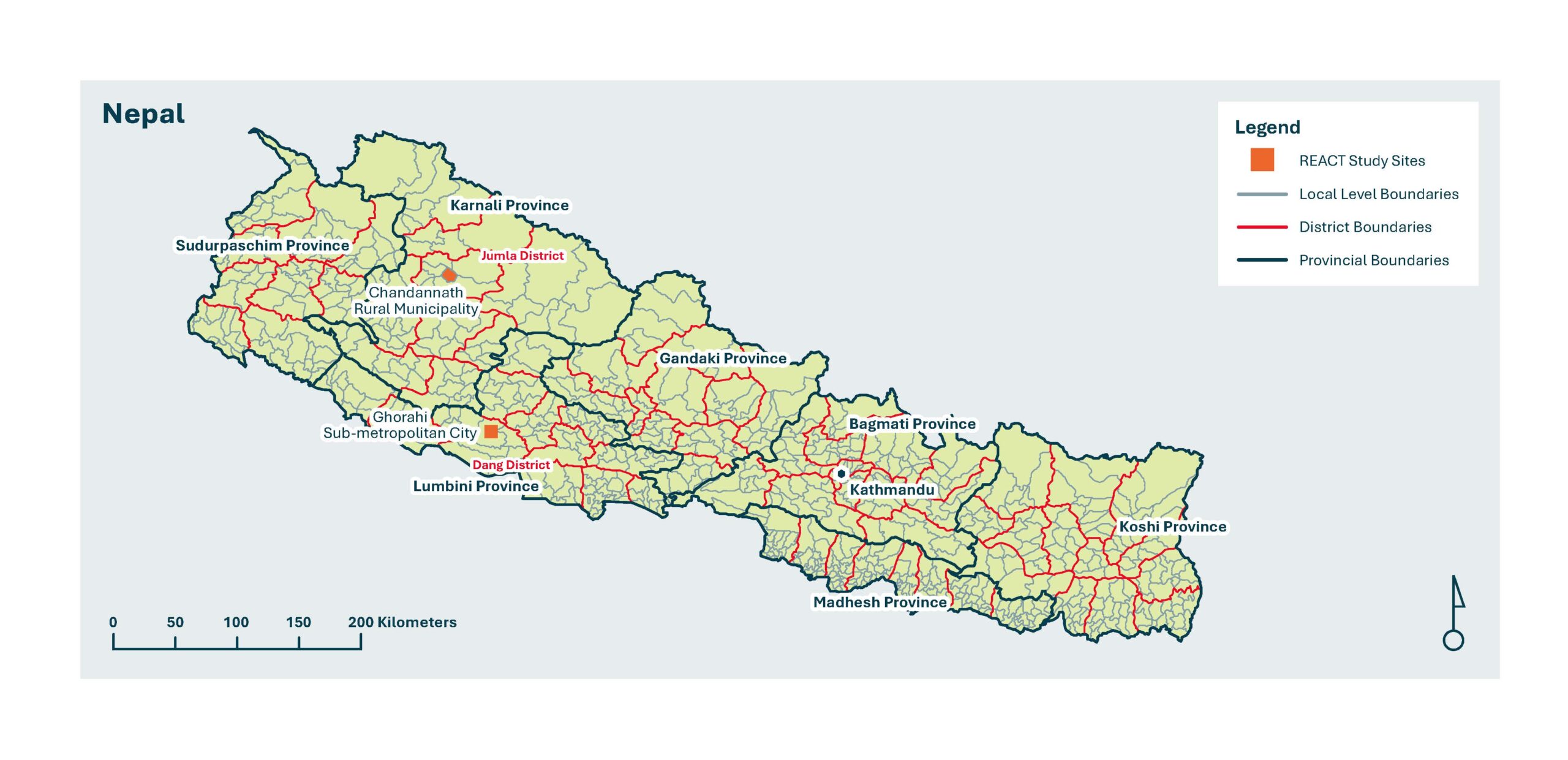
Nepal study sites and interventions
Nepal adopted a decentralised system of governance in 2015, with three tiers:
- federal government – responsible for policy, standards, regulation and central hospitals (tertiary level care),
- provincial government – provincial hospitals (secondary level care) and logistics and technical support to local government, and
- local government – manages and delivers basic healthcare services.
Health workforce management is shared across the three tiers, however there are challenges with clarity of roles and coordination, affecting the motivation of the health workforce. We have selected two settings. Both are operating as sentinel sites which report to the Early Warning and Reporting System in the federal government.
Chandannath Municipality
Terrain
a remote, rural, mountainous area in Jumla District, Karnali Province
Population
21,036 people
Health Services
10 public health facilities, 128 health facility workers, 81 community health workers
Climate Challenges
flood, avalanches, heavy rainfall, landslides, snowstorms, windstorms and forest fires
Ghorahi Sub-Metropolitan City
Terrain
an urban site on the flat Dang district of Lumbini Province
Population
200,530 people
Health Services
23 public health facilities, 195 health facility workers and 232 community health workers
Climate Challenges
flood, forest fires, heavy rainfall, landslides and windstorms