
The climate crisis is the single largest threat to human health.
Extreme weather events, such as heatwaves, droughts, floods and landslides, lead to physical and emotional trauma and population displacement. Global impacts include:
- shifting temperature and precipitation patterns,
- reduced air and water quality,
- food insecurity contributing to malnutrition,
- changing distribution of disease vectors and an increase in infectious diseases (the number of months suitable for malaria transmission increased by 14% in Africa from 1951 to 2021, and the likelihood of dengue transmission increased by 12% during the same time),
- maternal and newborn complications,
- a 68% increase in heat-related mortalities between 2000 and 2021, and
- up to 132 million people will fall into poverty within the next decade due to direct health impacts of climate change, and approximately 1.2 billion people will be displaced by 2050 (World Bank).
The climate crisis also impacts people’s ability to access health services and health systems’ ability to provide quality services.
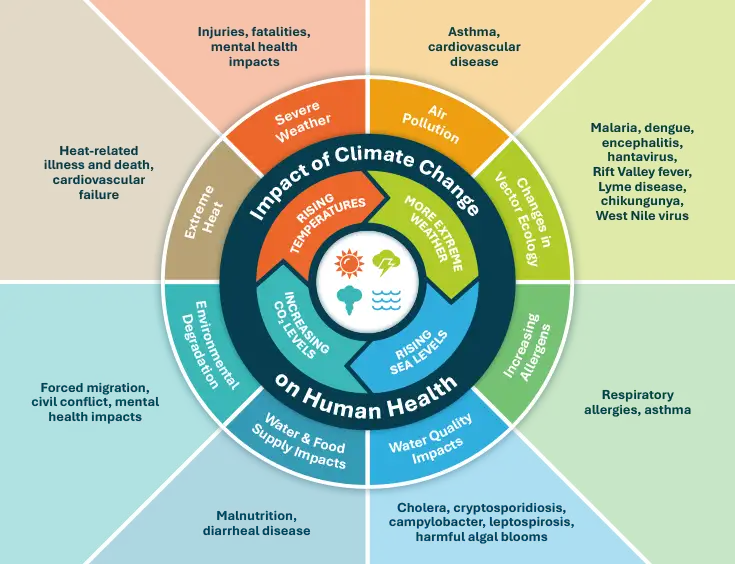
Diagram showing the impact of climate change on human health
Air pollution: Asthma, cardiovascular disease
Changes in vector ecology: Malaria, dengue, encephalitis, hantavirus, Rift Valley fever, Lyme disease, chikungunya, West Nile virus
Increasing allergens: Respiratory allergies, asthma
Water quality impacts: Cholera, cryptosporidiosis, campylobacter, leptospirosis, harmful algal blooms
Water and food supply impacts: Malnutrition, diarrhoeal disease
Environmental degradation: Forced migration, civil conflict, mental health impacts
Extreme heat: Heat-related illness and death, cardiovascular failure
Severe weather: Injuries, fatalities, mental health impacts

Climate change in Nepal and its impact
Nepal is the twelfth most climate-vulnerable country in the world. It is experiencing changes in both its weather patterns and extreme weather events. Impacts include:
- Weather-related disasters: Nepal is subject to heavy rainfall, floods, landslides, forest fires, cold temperature waves, thunderbolts, windstorms and epidemics. Incidents have increased from 240/year in 2015 to 2,366/year in 2024.
- Increasing impacts: of the people physically impacted by climate-induced disasters every year, 53% suffer injuries, 41.7% are killed, and 5.3% go missing.
- Food insecurity: rising temperatures and erratic rainfall disrupt agriculture, impacting on people’s livelihoods and mental health and contributing to malnutrition.
- Increased cases of infectious diseases: there is a shifting pattern of vector-borne diseases and risk of climate sensitive diseases across new geographical regions. A 1ºC rise in average temperature is associated with a five-fold rise in water-borne and vector-borne disease-related morbidity and mortality.
- Increased instances of non-communicable diseases: Temperature-related morbidity and mortality are rising.
- Health system challenges: Nepal’s health system must adapt to the impacts of the climate crisis, tackling limited infrastructure and a shortage of health workers.

Climate change in Zimbabwe and its impact
Zimbabwe is the 15th most vulnerable country to climate crisis (based on climate impacts 2000-19). It was ranked 2nd in the global climate risk index in 2021, largely because of floods, high temperatures and variable rainfall and droughts. Temperatures in Zimbabwe are rising at twice the global rate, with more frequent heatwaves of unprecedented intensity. Zimbabwe is experiencing:
- Rising temperatures and heatwaves: contributing to heat-related illnesses including heat exhaustion and heatstroke
- Less rainfall: the country has seen a 5% decrease in rainfall since 1915, with increased frequency and longer dry spells during the rainy season. It is estimated that there will be a 21% increase in incidence of severe drought between 2040 and 2059.
- Food insecurity: drought has severe negative impacts on agricultural productivity and food security. In the 2019/20 season, 5.5 million rural and 2.2 million urban Zimbabweans were estimated to be food insecure.
- Increased burden of infectious diseases such as cholera, malaria and diarrhoea.
- Increased instances of non-communicable diseases including respiratory illness, malnutrition, and maternal and newborn complications.
- Health system challenges: Zimbabwe faces serious shortages of health staff and resources.
The similarities and differences in Nepal and Zimbabwe climate crisis challenges, policy and implementation responses provide us with a unique opportunity to apply cross-country learning that will generate lessons within and beyond the two country contexts.